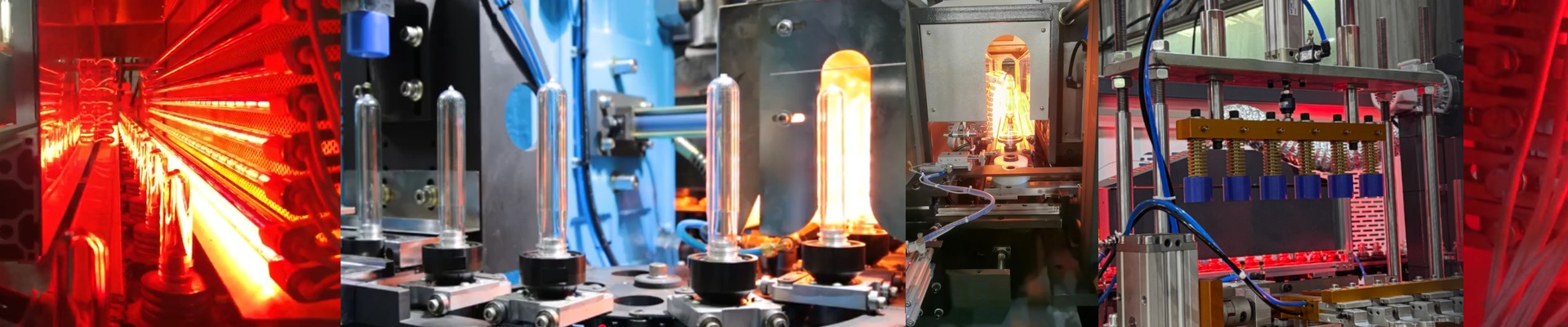
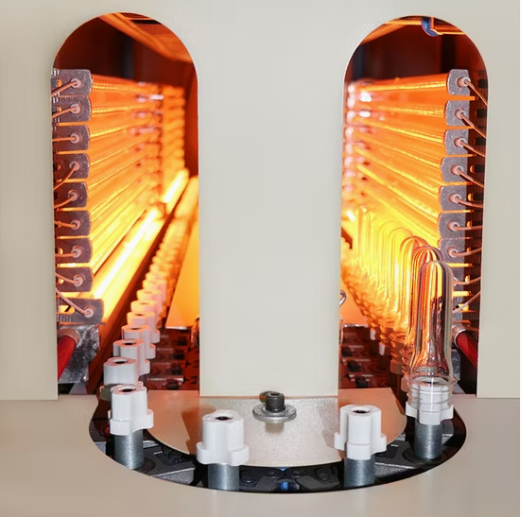
On a Contiform 3 line, uneven preform heating makes its presence known right away. You see thick-wall drift, blown bottle defects, and a heating tunnel that fights you instead of settling in. Once the original halogen emitters age, output falls off, zones drift, and you spend more time chasing temperature than running cycles.
What matters, technically
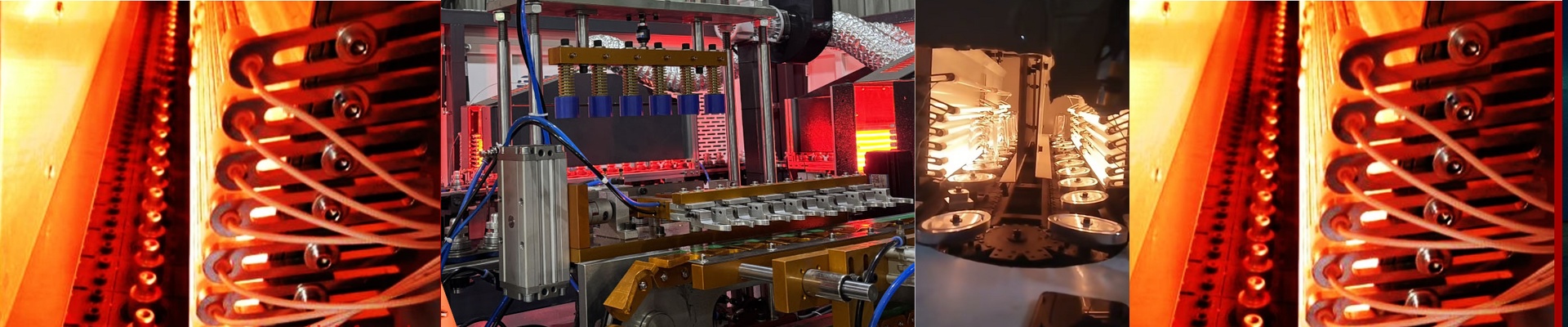
We built the Contiform 3 heater upgrade around short-wave infrared quartz emitters matched to the machine’s power and geometry. Each emitter runs at the OEM voltage, draws rated current, and plugs into the standard R7s connector—so you swap lamps without rewiring the heating tunnel. The quartz envelope stands up to thermal shock in high-cycle blow molding, and the tight filament geometry keeps the hot zone where it needs to be: on the preform shoulder and body. Output stays stable over time, so you can hold a repeatable heating curve shift after shift.
Why it lands on the line
It comes down to control you can measure. With stable infrared output, preform heating gets more consistent, and that shows up as fewer pinholes, better weight control, and less scrap from off-center stretch. Energy use drops because short-wave infrared heats fast and wastes less on the tunnel structure. Add in longer emitter life and fewer lamp changes, and you cut down the micro-stops that eat OEE. In practice, that’s more bottles per hour with less temperature drift.
The practical details
Installation is straightforward—R7s plug-and-play—but the heating window needs retuning after the switch. Expect a short validation run to reset zone setpoints, belt speed, and the preform temperature profile. Also, check your reflector condition; cracked or oxidized reflectors will undercut performance even with fresh lamps. Plan the changeout during a scheduled stop, and you get the gains without surprises.