



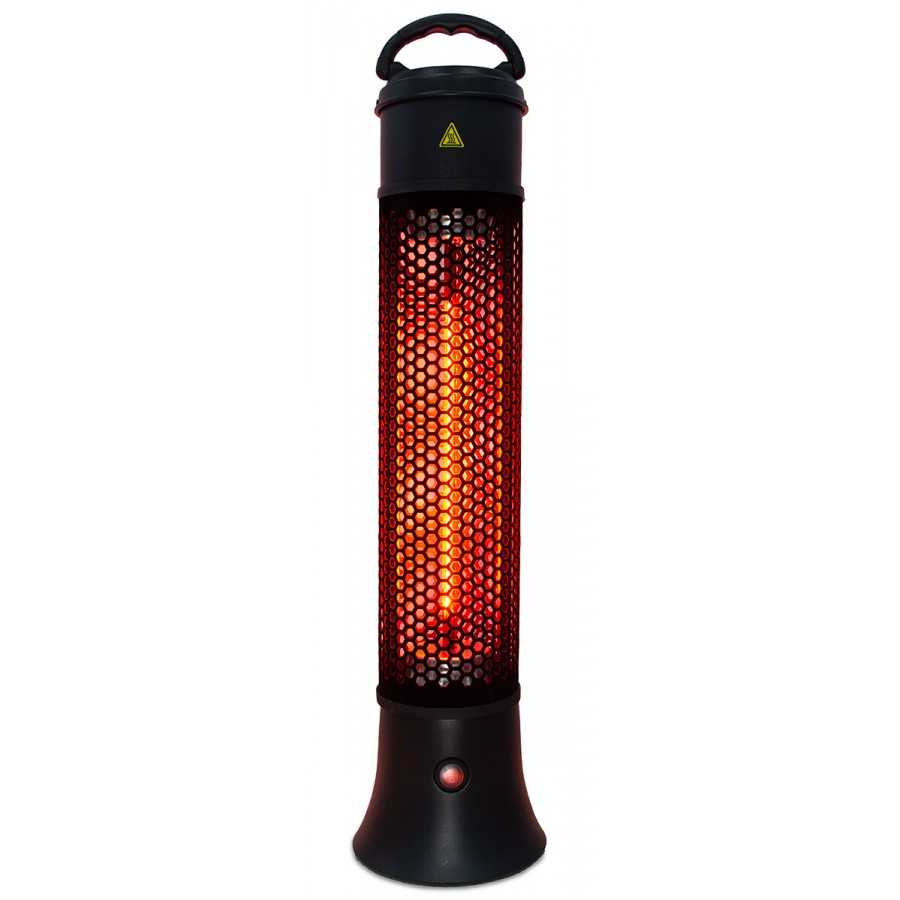
When evening drops and the breeze turns sharp, the patio goes quiet fast. Guests pull jackets tight, and the conversation shortens. A standing patio heater changes that—quietly, instantly, without the mess of an open flame. We built this model around a simple goal: good-looking, tough warmth that doesn’t price people out.
What matters under the hood
This standing patio heater runs on infrared radiant heat, so warmth hits people and furniture directly—not the empty air around them. Inside, you get a long-life carbon fiber heating element inside a quartz tube, chosen for quick heat-up and steady output even when the wind picks up. Typical power is 1,500–2,000W, and it plugs into a standard 120V outlet, so it plays nice with home circuits. A built-in thermostat keeps the heat comfortable rather than scorching, and tip-over protection shuts the unit off if it gets bumped. For outdoor use, the design targets an IP rating that can handle light rain and splashing—because patios are real-world spaces, not showrooms.
Why this approach works outdoors
A standing patio heater shines where traditional heaters feel slow or noisy. You feel warmth within seconds, so you can keep dining, reading, or entertaining without waiting around. Because the heat is directional, you’re not wasting energy heating the sky above the table. The payoff is a cozier outdoor room, longer evenings, and a steady, even warmth that helps everyone relax. For homeowners, it also means fewer drafts, less dust circulating, and a clean look that fits modern outdoor living.
The details that make the difference
Set the heater on a firm, level surface and keep it clear of tablecloths, curtains, and low furniture—radiant heat needs line-of-sight and proper clearance to do its job. It’s designed for covered or partially covered patios; in heavy, prolonged rain, move it under shelter. For comfort, start with a lower thermostat setting and adjust upward only if needed. Warmth comes on fast—keep it comfortable, not scorched.