



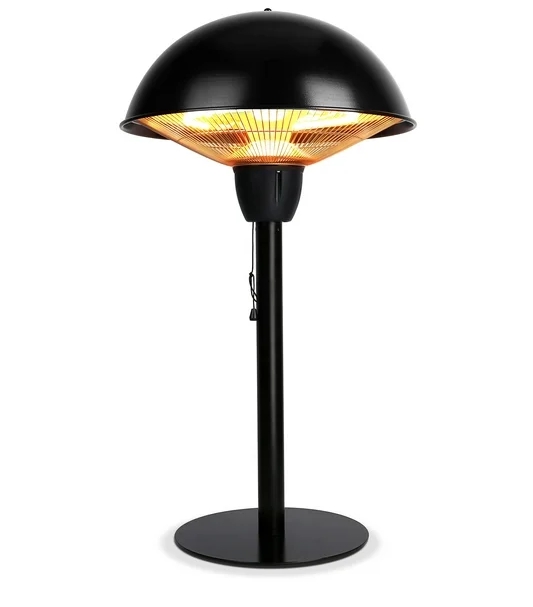
On a winter morning in the garage, that draft sneaks under the bay door and bites your wrists. Fingers go stiff, tools get slick, and the whole job bogs down. A travel electric heater built around infrared warmth flips that script—quick.
What matters under the hood
We lean on a short-wave infrared element that throws heat in a focused beam. It warms people and tools directly, not the air around them. In a 120V travel electric heater, that means you can plug into a standard outlet and pull 1500W of radiant output, with a carbon fiber or quartz core that lights up in seconds. You feel heat on your hands and forearms almost the instant you flip the switch.
Why this works in a garage
Garage bays are drafty by nature, and trying to heat the whole room is slow and expensive. Infrared heating targets the work zone—your bench, the vehicle, your stance—so the air stays cooler while your body stays warm. You keep fine motor control, tools feel steady, and service cycles stay consistent. For an electric heater in a shop, that means fewer mistakes, less fatigue, and lower energy use because you’re only heating where you stand.
The practical stuff
Set the unit 3–6 feet from the work area, angled toward your hands and chest, and keep it clear of oily rags and solvents. Most travel electric heaters are for supplemental heat, not full-space warming, and they perform best when the ambient temperature isn’t extreme. Treat it like any electric heater: avoid extension cords when you can, and pick a model with a stable base, overheat protection, and a sealed housing that can handle a bit of dust.