

How to Actually Set Up Smart Outdoor Heaters (Without the Headache)
If you’ve ever tried to keep a patio warm in the middle of winter, you know the struggle. You need something that can handle a downpour of rain or a dusting of snow without blowing a fuse the second you flip the switch. That’s why we use IP65-rated enclosures. In plain English? It means the guts of the heater are sealed tight. Dust stays out, water stays out, and your electrical terminals stay dry. You can leave them exposed to the elements and not spend your whole evening worrying about a short circuit.
Heat that actually hits you
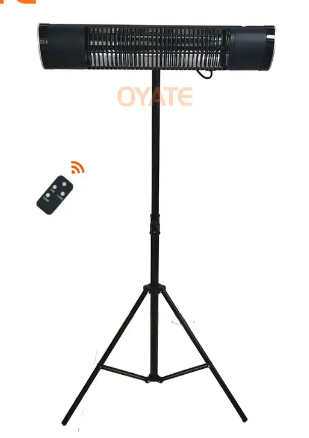
Most heaters try to warm up the air around you. The problem is, if there’s a breeze, that warm air just blows away. Our infrared units work differently. They send out short-wave radiation that travels through the air and hits you directly. It feels like standing in the sun. The best part? There’s no waiting around. When you trigger the system through your smart hub, the tungsten filament glows and gets hot in seconds. You get that “ah, finally” feeling of warmth immediately, rather than waiting twenty minutes for a convection heater to slowly wake up.
Making it “Smart”
Getting these to talk to your smart home is simpler than it sounds. It usually comes down to a relay or a PWM controller. We basically wire the heater into a smart switch that can handle the heavy lifting. Now, instead of walking outside in the cold to turn a knob, you just tell your voice assistant to turn on the heat or tap a button in your app. The signal hits the relay, the circuit closes, and the lamps fire up. If you’re doing a bigger space, you can set up “zones.” There’s no point in heating the entire patio if everyone is just huddling around the fire pit. You can just target the seating area and save some power.
A few things to watch out for
Here is the catch: these lamps pull a lot of power. If you try to cram too many heaters onto one smart circuit, you’re going to trip your breaker or fry your relay. It’s just not a good move. We always suggest using dedicated circuits for bigger setups. Also, make sure your wiring gauge is thick enough for the load. If the wires are too thin, you’ll get a voltage drop, and your “toasty” heat will end up feeling lukewarm. One last tip: while the seals keep the rain out, the glass face still acts as a heat sink. Where you put the heater matters. If you block the path between the lamp and the person, you’re wasting energy. Give the heat a clear shot.